







Articles
By: Monique Buduan
What Do Drivers Actually Want From Motor Vehicle Agencies?
Neumo’s national survey of more than 600 licensed drivers reveals why drivers want multiple ways to handle DMV transactions and what that means for modernization.

For millions of Americans, interacting with a motor vehicle agency is one of their most regular and unavoidable touchpoints with their local government.
Transactions like license renewals, vehicle registrations, title transfers, address changes, and REAL ID applications may be routine, but collectively, they shape how residents experience government services in their everyday lives. Increasingly, drivers expect those experiences to fit into their lives rather than the other way around.
Neumo’s latest national survey, Inside the Driver Experience: A National Survey on Motor Vehicle Services, asked licensed vehicle owners across the United States how they interact with their motor vehicle agencies, which service channels they use, which they prefer, and what matters most when choosing between them. The findings are based on an online survey of more than 600 licensed vehicle owners who completed a motor vehicle transaction within the past two years.
The results highlight the progress that’s been in the works for years. Digital service options are already widely available, many drivers report relatively quick transactions, and a majority say their agency’s digital experience compares favorably with the modern services they use elsewhere. But the data also challenges the idea that modernization means the same thing for every individual.
Motor Vehicle Services Are an Ongoing Part of the Resident Experience
DMV interactions are not rare. Nearly three-quarters of survey respondents, 72%, said they interact with their motor vehicle agency at least once per year, including 19% who do so multiple times annually. Vehicle registration renewals and driver’s license renewals were the most common services respondents used during the previous two years.
That frequency is significant for motor vehicle agencies, as every renewal or routine transaction is another opportunity to shape how residents perceive government service. A process that is easy to navigate can largely disappear into someone’s day. A process that requires an unnecessary trip, a long drive, or time away from work can have the opposite effect.
The good news is that many agencies appear to be making progress.
More than one in four drivers said their most recent transaction took less than 10 minutes, while another 31% completed theirs within 10 to 20 minutes. Altogether, 58% finished in 20 minutes or less. The more revealing question, however, may be where those transactions are happening.

The Counter Is Still Dominant, but Isn’t Always the First Choice
More than half of respondents, 56%, completed their most recent transaction in person at an office. The agency website came in a distant second at 25%, while self-service kiosks represented another 11% across agency and third-party locations.
If you look only at current behavior, the conclusion might seem obvious. The traditional office remains the center of the DMV experience. But respondent preference tells a different story.
When respondents were asked which channel they would prefer for most routine motor vehicle services, only 26% selected in-person service. Online service ranked first at 38%, followed by a mobile app at 21%. Another 14% preferred self-service kiosks, whether at an agency office or another location.
That gap between what people actually do and what they would prefer to do deserves attention.
It suggests that the goal for agencies shouldn’t necessarily be to eliminate in-person service. Instead, the goal may be to make sure residents aren’t visiting an office simply because the channel they would rather use isn’t available, isn’t convenient, or isn’t well understood.
Drivers Want an Ecosystem of Options
One of the clearest findings in the survey is also one of the simplest. A heavy majority, 87%, of drivers say having multiple ways to complete a transaction is important to them.
No single preferred channel received a majority of responses. Online led at 38%, but more than six in ten respondents preferred something else. In-person service still matters to a sizable group. Mobile options appeal to others. Self-service adds another way to complete routine work.
That makes modernization less about picking the “winning” channel and more about building an ecosystem of choices. A resident renewing a registration from home may value a completely digital experience. Someone who needs a printed decal immediately may prefer a kiosk. Another person may have a complicated title issue and want to speak directly with an employee.
The right experience depends on the transaction and the person completing it.
The survey reinforces that point. Thirteen percent of respondents specifically cited the ability to speak with agency staff as the primary reason behind their preferred channel. Preserving that option while moving appropriate routine transactions to other channels can help agencies use each service model where it provides the most value.
Convenience Is Really About Time and Place
What determines which option a driver chooses? Mostly, practical considerations.
Short wait times ranked as the top priority when interacting with a motor vehicle agency, selected by 57% of respondents. Convenient locations followed at 48%. When drivers were asked why they preferred a particular transaction channel, convenience and speed again led the responses.
In other words, residents aren’t necessarily asking for more technology. They’re asking for less disruption.
They want to spend less time waiting. They want services closer to where they live and work. They want to complete routine tasks without reorganizing the rest of their day around government office hours.
That distinction should matter to agencies evaluating modernization investments. A new channel creates the most value when it solves an actual resident problem, whether that’s reducing travel, extending access beyond traditional business hours, or completing a simple transaction more quickly.
Digital Government Has Already Come a Long Way
The survey also offers an important counterpoint to the assumption that government digital services are dramatically behind private-sector experiences. More than half of respondents, 56%, said their motor vehicle agency’s digital experience is comparable to modern banking, shopping, and healthcare services. Another 35% described it as somewhat behind, while just 9% said it was significantly behind.
Digital availability is also substantial. Seventy-one percent reported that at least some common transactions can already be completed without visiting an office.
There is, however, a visibility problem. More than one in five drivers, 22%, said they didn’t know whether their agency offered alternatives to an office visit. For agencies that have already invested in alternative channels, that finding presents an opportunity that doesn’t necessarily require new technology at all.
Making service options easier to discover through renewal notices, websites, signage, appointment communications, and other outreach can help agencies get more value from the capabilities they already have. Modernization only improves the resident experience if residents know their options exist.
Self-Service Can Bring the DMV Into Everyday Life
Perhaps one of the most notable findings involves self-service kiosks.
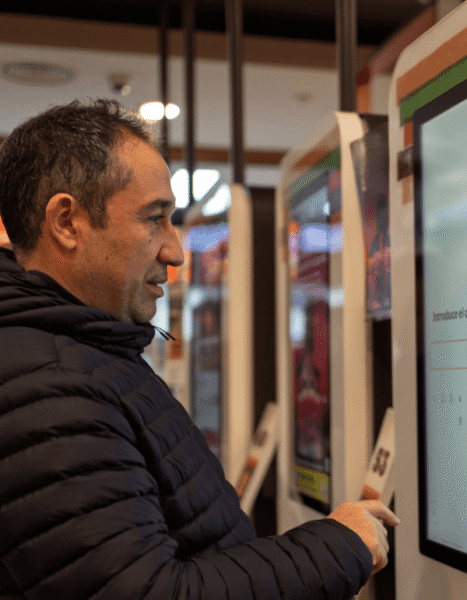
When asked how likely they would be to use a self-service kiosk for motor vehicle transactions if one were available at a nearby retail location, 69% of drivers said they would be likely to do so. Thirty-eight percent said “very likely,” while another 31% said “somewhat likely.” Only 12% said they would be unlikely or very unlikely.
That interest makes sense when viewed alongside what drivers said they value most.
A retail-based kiosk can combine the immediacy of an in-person transaction with the convenience of a distributed service channel. Some motor vehicle transactions still require a physical output, such as a registration decal or receipt. A kiosk can provide that output without requiring the driver to visit a government building during standard business hours.
That is especially relevant because proximity doesn’t mean the same thing everywhere.
The Same Priority Looks Different Across Communities
The survey’s rural, suburban, and urban findings illustrate why a multichannel strategy matters.
Rural drivers were the most likely to have completed their most recent transaction in person, at 67%. They also reported fewer alternatives, with 10% saying their agency offered no way to transact remotely and another 25% unsure whether alternatives were available. Respondents frequently asked for closer locations, evening and weekend access, and other ways to avoid long trips.
Suburban drivers showed a different pattern. Seventy-six percent preferred online, mobile, or self-service channels for routine transactions, while their open-ended feedback frequently focused on extended hours, clearer information about what could be handled remotely, and off-site access.
Urban drivers reported the broadest availability of digital options, yet their feedback still emphasized speed, capacity, extended hours, and more locations. Ninety-two percent said having multiple service options was important.
The underlying priority remains remarkably consistent. Governments need to make services easier to access and faster to complete. How an agency accomplishes that may look very different depending on the community it serves.
Modernization Doesn’t Have to Mean Replacing the DMV Office
Perhaps the most useful takeaway for motor vehicle agencies is that modernization doesn’t have to be framed as a choice between physical and digital service. Drivers aren’t asking agencies to replace the counter. They’re asking for more ways around it when they don’t need it.
That creates an opportunity to use each channel more intentionally. Routine transactions can increasingly move to online, mobile, and self-service options, while agency employees and in-person capacity remain available for residents with complicated transactions, questions, or a preference for human assistance.
Self-service DMV kiosks, for example, are designed to extend services such as registration and ID renewals and provide physical outputs including decals and receipts in government offices, retail stores, and other community locations. This aligns closely with what drivers in the survey are asking for.
The Next Phase of the Driver Experience Is About Choice
The survey doesn’t describe a DMV experience stuck in the past. In many places, transactions are already fast. Digital options are already available. Most interestingly, more than half of drivers believe the digital experience offered by their motor vehicle agency holds up against the commercial services they use regularly.
The next opportunity for local governments is more nuanced. It’s making sure the right service is available through the right channel, in the right place, at the right time.
For some residents, that’s an online transaction from home. For others, it’s a kiosk at the grocery store after work. And sometimes, it’s still a conversation with a knowledgeable employee across the counter. The strongest motor vehicle service strategy doesn’t have to force residents toward one of those experiences. It can give them the freedom to choose.
Explore the full findings in Neumo’s Inside the Driver Experience: A National Survey on Motor Vehicle Services to see what U.S. drivers say about speed, digital access, self-service, and the future of motor vehicle services.